Here's what no one tells you about disconnection
Your body is still there. Your desire might be quieter, your sensation muffled like you're experiencing everything through a thick glass wall, but both can come back. Dissociation during sex, or a general sense of being checked out from your own body, isn't a character flaw. It's a stress response, a trauma response, a grief response, or sometimes just the aftermath of burnout. And it's way more common than the silence around it suggests.
What makes it tricky is that standard approaches to pleasure often assume you're already connected. They assume you can feel. When you can't, those approaches fail, and then you blame yourself. You don't need blame. You need a different entry point.
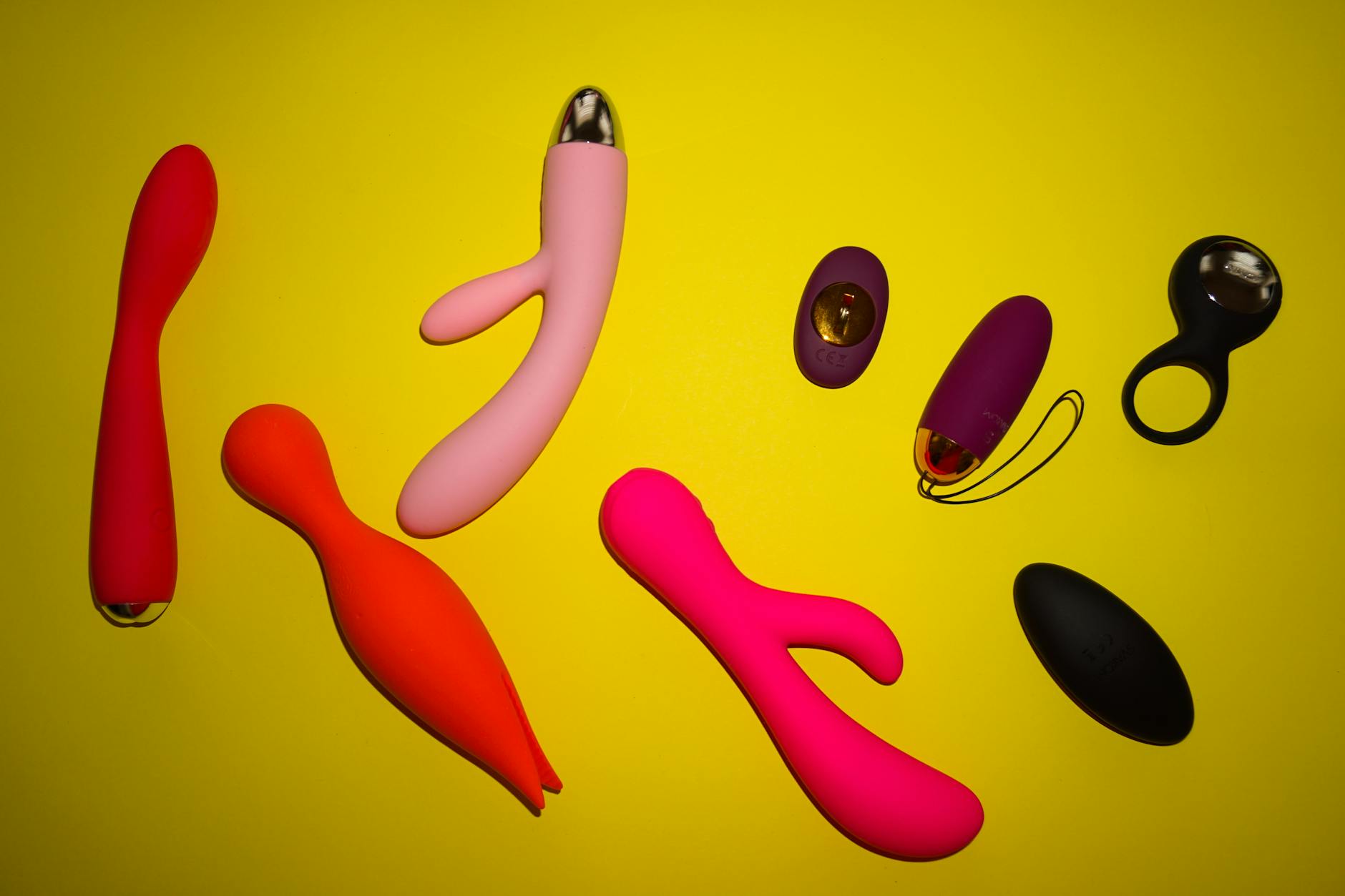
That's where a lemon vibrator comes in. Not as a magic wand. As a deliberate, gentle tool for sensation re-education.
Why dissociation and numbness happen
When your nervous system is working overtime, it learns to turn sensation down. Chronic stress, trauma, anxiety, depression, grief, and even prolonged caregiving can all trigger this. Your brain essentially says: "Too much. Shutting down input." It's protective. It's also isolating, because pleasure is one of the first things to go silent.
The clitoris has thousands of nerve endings, but those endings only matter if the signal reaches your brain. Dissociation interrupts that signal. You might be touching yourself and feel almost nothing. You might see your body responding but not feel the response. You might feel like you're watching yourself from above. All of this is real, and none of it means you're broken.
What changes is the pathway. A lemon vibrator, especially one designed like a clitoral suction device, sends a signal that's hard to ignore. It's not subtle. It's not easy to zone out from. The rhythmic stimulation on concentrated nerve clusters creates a feedback loop that's difficult for a dissociated nervous system to dismiss.
The nervous system reset approach
You're not trying to have an orgasm. Not yet. You're trying to wake up the connection.
Start with your body fully clothed. Hold the lemon vibrator in your hand. Don't use it yet. Feel its weight, its shape, the texture. Let your brain register this as safe. Put it somewhere on your body—your wrist, your forearm, your collarbone—and turn it on at the lowest setting. The goal here is noticing. Can you feel the vibration? Where does it seem to go? Does it trigger any response, or does it feel distant? Neither answer is wrong.
Stay here for 3 to 5 minutes. Every session, your nervous system is learning: this feeling is okay. This is controlled. This is mine.
After a few sessions (days or weeks—there's no timeline), move to skin. Wrist, inner arm, thigh. Still clothed lower body. Still the lowest setting. You're building a map of where sensation lives. Some spots will feel more alive than others. That's information.
When you're ready to move closer to the clitoris, do it slowly. Outer labia first, maybe through underwear or a thin layer of fabric. The point isn't arousal yet. It's sensation.
Building sensation incrementally
Dissociation teaches the body to mistrust its own signals. Rebuilding it means proving, over and over, that sensation is safe and under your control.
Use the lemon vibrator for 2 to 3 minutes at a time. Short sessions matter because they train your nervous system to stay present. Longer sessions become work, and your brain will check out again to avoid the pressure.
Change one variable at a time. Week one: same location, lowest setting, 2 minutes. Week two: same location, lowest setting, 3 minutes. Week three: same location, pattern 2 instead of pattern 1. This slowness feels boring. That boredom is the point. You're rewiring how your body listens.
When you move to the clitoris itself, start at the edges. Direct stimulation can feel overwhelming if you're reconnecting. The suction and massage pattern of a lemon vibrator is gentler than other vibrators because it's not a straight buzz. It's a wave. Your clitoris can say yes to a wave more easily than to a jackhammer.
Rhythm and the nervous system
Your nervous system responds to predictability. If the sensation is chaotic, your body will retreat. If it's rhythmic, your body will gradually trust it.
Pick a pattern on your lemon vibrator and stick with it for weeks. Don't chase orgasm. Don't switch patterns looking for a shortcut. Let your nervous system learn this one rhythm so completely that it can predict what comes next. That predictability is what allows presence.
Some people find that they need to pair the vibrator with something grounding. Feet on the floor. Hand on your heart. A breathing practice (in for 4, out for 6). Anchor yourself in your body in multiple ways. The vibrator is one signal. Your breath is another. Your hands touching your own skin is another. The more channels of feedback, the harder it is to dissociate.
What to do if you still feel nothing
First: you might not feel much for a while. That's okay. Your body is learning. Sensation can come back in degrees.
Second: check your medication. Antidepressants, anti-anxiety medication, antihistamines, and blood pressure meds can all dull sensation. Not always. Often it's dose-dependent. If you're on medication, talk to your prescriber about whether timing (taking it after sex instead of before) or dosage adjustments might help. Don't stop medication on your own, but do have this conversation.
Third: make sure you're not adding pressure on top of disconnection. "I should be able to feel this" is a handbrake on reconnection. Instead, think: "My body is learning. I'm patient with my body."
Fourth: consider whether other body reconnection work might help. Somatic therapy, yoga (especially trauma-informed yoga), cold water exposure, dance, or other modalities that prioritize feeling your body in space. A lemon vibrator works best as part of a broader practice of coming home to your own skin.
When to bring a partner in
If you're partnered, your partner needs to understand this isn't about them or your desire for them. It's about your nervous system recalibrating. A good partner will appreciate being included in the rebuilding, not as the goal, but as a support.
Start with them present but not touching. You use the lemon vibrator while they sit nearby, maybe holding your hand or reading nearby. Presence without pressure. Over time, if you want, they can watch, or hold you, or eventually be part of the reconnection process. But that's a step down the road.
If a partner is pushing for faster progress or more sensation, that's a red flag. Reconnection can't happen under pressure. If you hear "you should be feeling this by now" or "let me help," you're being pushed into a nervous system state where the body shuts down further. You deserve a partner who can sit with the gradual work.
The patience piece (because it's real)
Reconnection isn't a weekend project. Some people feel significant shifts in 3 to 4 weeks. Others take months. That's not failure. That's your nervous system being smart about slowly opening back up.
Keep a simple log. Not obsessively, but note: What did I feel today? Where did I feel it? Did I stay present, or did my mind wander? Over weeks, the log becomes evidence that something is happening, even if it feels glacial.
Your pleasure matters. Your body matters. The time you invest in reconnection is time invested in yourself. A lemon clitoral vibrator is a tool that makes that investment more efficient, because it sends a signal your nervous system can't quite ignore. But you're the one doing the actual work. You're the one choosing to listen. That's where the real power is.
Frequently Asked Questions
Can dissociation during sex be reversed with just a vibrator?
A lemon vibrator is a powerful tool, but it's one part of a bigger picture. Sensation reconnection often works best alongside therapy, stress reduction, medication adjustments (if appropriate), and patience. The vibrator gives your nervous system something concrete to focus on, which helps. But if dissociation is tied to trauma or ongoing stress, working with a therapist who understands both trauma and sexuality will accelerate progress significantly.
How do I know if I'm dissociating versus just not turned on?
There's a real difference. Not being turned on feels like disinterest. You can feel your body, but you don't particularly want to. Dissociation feels like you're outside your body, watching it, or like everything is muffled even when you want to be present. You might see physical responses (nipples hard, lubrication) but feel emotionally or sensorily distant. If you're unsure, ask yourself: "Can I feel my feet on the floor right now?" If that feels hard too, you're likely dissociated. If you can feel your feet but not arousal, you're probably just not in the mood.
Is it normal to need antidepressants and still want good sensation?
Absolutely. Antidepressants save lives. Some have minimal sexual side effects. Others significantly reduce sensation or orgasm capacity. If that's happening, talk to your doctor about dose timing, switching medications, or adding something to counteract the side effect. Some people combine medication with extra support from a lemon vibrator because the suction pattern is intense enough to cut through some of the numbness. You don't have to choose between mental health and sexual pleasure. You deserve both.
What if my partner gets uncomfortable with me using a vibrator for reconnection?
That discomfort is their work to do, not yours to solve. You're rebuilding your nervous system's capacity to feel. That's non-negotiable. A supportive partner will see this as you taking care of yourself. If a partner frames it as competition or as a sign you're not attracted to them, that's a relationship dynamic worth examining, possibly with a couples therapist. Your body, your pleasure, your reconnection. That's yours to claim.
How long before I feel a "normal" level of sensation again?
It varies. Some people notice shifts in 3 to 6 weeks of consistent (2 to 3 times per week) use of a lemon vibrator plus other reconnection work. Others take 2 to 3 months. The timeline depends on how long you've been dissociated, what caused it, whether you're in therapy, and your own nervous system resilience. Progress isn't linear. You might have a session where you feel a lot, then slide back. That's normal. The overall trajectory over weeks is what matters.
Can I use a lemon vibrator if I'm also in therapy for trauma?
Yes. In fact, many therapists who work with trauma appreciate that clients are using tools like a lemon vibrator as part of their embodiment practice. Tell your therapist what you're doing. They might offer guidance on pacing or might suggest combining the vibrator with grounding techniques they teach. A good therapist sees pleasure work as part of healing, not separate from it.
The bottom line
Dissociation isn't permanent. Neither is numbness. Neither is the distance between you and your own body. A lemon vibrator can't fix everything, but it can be the bridge back. It's a signal your nervous system can hear when other signals feel too quiet. Start small. Be patient. Let your body come home at its own pace.
If you're ready to begin, the lemon clitoral vibrator is designed specifically for this kind of gentle, cumulative reconnection work. Its suction and massage pattern creates sensation that's hard to zone out from, without the harshness of standard vibration.
Your pleasure is worth the investment. Your body is worth coming back to. Start today.
If you have questions about how to navigate this journey, reach out—we're here to help. Contact us anytime.