
Let's name what's actually happening
Anxiety during sex is not a moral failure or a sign you don't want this. It's your nervous system doing exactly what it was wired to do. When your brain perceives threat (performance pressure, past trauma, perfectionism, fear of being judged), it diverts blood flow away from the genitals and toward your muscles. This is the fight-or-flight response. Your body is protecting you. The problem is that protection kills sensation.
This is where most advice fails. People tell you to "relax" or "just be present." That's like telling someone drowning to simply breathe underwater. What you actually need is a tool that speaks directly to your nervous system in a language it understands.
That tool can be a lemon vibrator.
How anxiety physically blocks arousal and sensation
Here's the physiology: anxiety triggers the sympathetic nervous system (your accelerator). Arousal needs the parasympathetic nervous system (your brake pedal). These two can't run simultaneously. When you're anxious, your pelvic floor tenses, your clitoris becomes less engorged, and the nerve sensitivity drops. You're still you. Your capacity for pleasure hasn't changed. But the pathway to it is blocked.
A lemon vibrator works differently than most stimulation because it's working with your neurology, not against it. The rhythmic, predictable stimulation from a clitoral vibrator like the Lem gradually signals safety to your nervous system. It's not a distraction from anxiety. It's a somatic anchor. The sensation is strong enough to interrupt the anxiety loop, but not so jarring that it triggers more fear.
Many of my clients report that starting with the vibrator first, before anything else, actually makes the anxiety smaller. You're taking back territory.
Solo play as nervous system reset
Before you introduce a lemon vibrator during partnered sex, use it alone. This matters for anxiety specifically.
When anxiety is high, partner presence can amplify the pressure. You're monitoring their experience while also trying to manage your own nervous system. That's a cognitive load you don't need right now. Solo play with a lemon clitoral vibrator lets you:
- Build a new sensory memory. Without the spectator effect, you can notice what sensation actually feels good, not what you think should feel good. This rewires the anxiety feedback loop.
- Practice the grounding protocol. Use the vibrator in a quiet space for 10-15 minutes, even if you don't orgasm. Notice your breath. Notice where you're holding tension. This is nervous system training.
- Reestablish baseline sensation. Anxiety flattens everything. Solo vibrator sessions remind your body what arousal actually feels like when there's zero performance pressure.
Do this 3-4 times before attempting partnered stimulation. You're not trying to reach orgasm every time. You're rebuilding the signal.
The specific technique: starting at lower intensity
If anxiety is active, jumping straight to pattern 3 or 4 on a lemon vibrator will feel overwhelming, not good. Your nervous system will interpret the intensity as another threat.
Start at pattern 1 or 2. This matters. Pattern 1 on a lem vibrator is gentle enough to feel supportive without triggering a startle response. Many anxious people find this pattern alone is enough to shift their nervous system state within 3-5 minutes. Your breathing deepens. Your shoulders drop. You're not being stimulated into pleasure so much as into safety.
Spend 5-7 minutes here. Let the vibration communicate "it's okay" to your system. Then, if you want to, graduate to pattern 2. There's no rush to intensity. Intensity is for bodies that are already calm.
Working with your breathing while using the vibrator
Anxiety lives in shallow breathing. Pleasure lives in deep breathing. When you're holding a lemon clitoral vibrator, your breath is the most direct line to your nervous system.
Here's what I recommend: start with your vibrator at pattern 1. Take 4-5 exhales before you notice any change in sensation. Seriously, don't rush this. On each exhale, imagine sending oxygen down to your pelvic floor. This is not spiritual woo. Breathing physically relaxes the pelvic floor and increases bloodflow.
After 5-7 minutes, you should feel a shift. Your body feels less braced. At that point, if anxiety has quieted, you can move up in intensity. If it hasn't, stay exactly where you are. Staying longer at low intensity is never wasted time. You're training your nervous system that pleasure is safe.
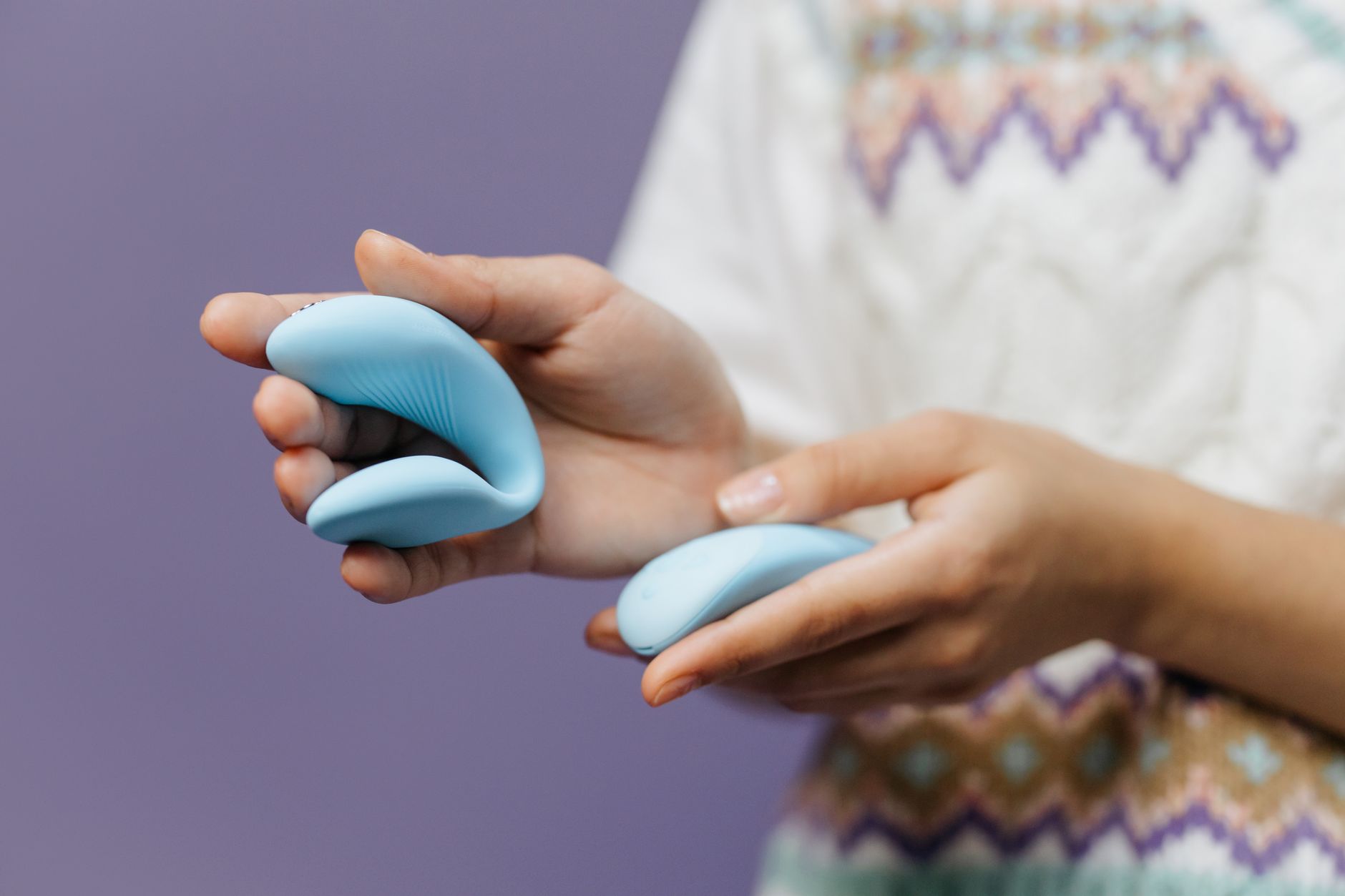
Photo by cottonbro studio on Pexels
How to integrate the vibrator with your partner without triggering more anxiety
This is the harder part. When you're ready to bring a lemon vibrator into partnered sex, the conversation matters as much as the tool.
Don't wait until you're already undressed and touched. Talk about it earlier, when you're fully clothed and your nervous system is calm. Say something like: "I notice anxiety sometimes dampens things for me. I want to try using a vibrator to help my body relax into pleasure. This isn't about you or our connection. It's about me managing my nervous system."
If your partner responds with defensiveness ("You need a toy to enjoy me?"), that's not about the vibrator. That's about their own insecurity, and it needs a separate conversation. A good partner understands that adding sensation tools is adding to the experience, not replacing them.
When you do use the vibrator together, try this structure:
- Start with your partner present but not touching you for the first 5 minutes. You're using the lemon vibrator at pattern 1-2, rebuilding that calm sensation state.
- Once you've reset your nervous system (you'll feel it), your partner can begin touch. Non-sexual touch first. Hands on your back, your thighs. Breathing near you. Nothing goal-oriented.
- Only after your nervous system is clearly calm does sexual contact enter the picture.
This sounds slow. It is. But for anxious arousal, slow is the fast way.
When anxiety roars back: what to do mid-session
Sometimes anxiety spikes even when you've prepared. You're in the middle of sex or partnered pleasure, and suddenly your chest tightens and your mind starts spiraling.
Stop. Say "pause for a moment." There's no shame in pausing. A partner who loves you will pause without question.
Pick up your lemon vibrator and use it for 1-2 minutes at pattern 1. This is a nervous system reset button. The familiar sensation, the predictable rhythm, the fact that you're taking control of your own pleasure. This breaks the anxiety spiral faster than any reassurance can.
Your partner stays nearby, but lets you run this part. After 1-2 minutes, you usually feel the anxiety loosen. Your body has the message: you're safe. Then you can decide whether to continue or take a real break. Both are fine.
The uncomfortable truth about performance pressure
If you're experiencing anxiety during sex, part of the healing is looking at why. Performance anxiety often lives somewhere deeper. Are you worried about orgasming on schedule? Worried your partner will leave if sex isn't frequent or looks a certain way? Worried you're too broken, too much, not enough?
A lemon vibrator can reset your nervous system in the moment. But if the underlying belief system stays broken, the anxiety will return. You might benefit from conversations with a therapist or coach who specializes in sexuality and anxiety. I work with couples on this routinely, and the relief people feel when they're finally given permission to slow down, to feel, to exist without performing is profound.
Your pleasure matters. Your nervous system matters. A lemon clitoral vibrator is a genuinely helpful tool, but it's part of a bigger picture that includes your own self-compassion.
FAQ: Anxiety, Sensation, and Your Lemon Vibrator
Can using a vibrator actually reduce anxiety during sex or just distract from it?
It's both, and that's the point. A lemon vibrator is providing strong sensory input that interrupts the anxiety loop. But it's not pure distraction. The rhythmic stimulation actually signals your nervous system that you're safe, which is why the anxiety often stays quieter even after you stop using it. Distraction fades when you stop. Nervous system retraining lasts.
What if I feel MORE anxious when I start using the vibrator?
That sometimes means you're at too high an intensity. Drop to pattern 1, which feels almost subtle. Or it can mean you need more privacy or a different environment. Some anxious people find fluorescent lights make things worse. Try dimming the lights or closing your eyes. If anxiety spikes every time you try the vibrator, it's worth discussing with a therapist who specializes in sexual trauma or anxiety disorders. A lemon vibrator is a tool, not a cure, and sometimes other support is needed first.
How long before anxiety actually gets better, not just managed in the moment?
This varies wildly. Some people notice a shift in 2-3 weeks of regular solo use. Others take 2-3 months. You're retraining a nervous system, not fixing a broken part. The timeline depends on how deep the anxiety goes and whether you're also addressing the underlying beliefs driving it. Be patient with yourself. Weeks of consistent practice beats sporadic use.
Is it normal to feel disconnected from pleasure even when using the vibrator?
Yes. Anxiety is a dissociative state. Sometimes you're using the vibrator, your body is responding, but your mind is still somewhere else. This is depersonalization. When this happens, slow down further. Use the vibrator for short bursts (3-4 minutes) rather than long sessions. Combine it with body awareness work. Notice one specific sensation at a time. "My clitoris feels warm." "I feel pressure against my skin." This slowly rewires the disconnection.
Can I use a lemon vibrator during partnered sex if my anxiety is severe?
Absolutely. In fact, many people with severe anxiety find that starting with the vibrator during partnered touch actually makes the experience less anxiety-inducing, not more. Because you're not relying entirely on your own body's response or your partner's approval. You have a tool that reliably creates sensation. This can actually decrease performance pressure. Talk to your partner first. Then try it. You might be surprised.
If anxiety makes sex uncomfortable, will a vibrator fix the underlying relationship issues?
No. A lemon vibrator is brilliant at managing your nervous system in the moment and rebuilding sensation memory. But if the anxiety is rooted in not feeling safe with your partner, or if your relationship has deeper intimacy issues, that's a separate conversation that needs attention. A vibrator helps your body. A coach or therapist helps your heart and your partnership.
What happens next
Anxiety during sex is not permanent. It's not a character flaw. It's your nervous system doing its job a little too well. A lemon clitoral vibrator can be one of the most practical tools for interrupting that pattern and rebuilding a relationship with pleasure that feels safe.
Start with solo play. Build that sensory memory. When you're ready, bring it into your partnership with clear communication. And if the anxiety feels too big to manage alone, reach out for support. You deserve pleasure that doesn't come with a side of panic. That's not selfish. That's human.
If you're struggling with this, I'm here to talk through it. Drop me a line at Lemonlem and let's find what works for your nervous system.